Exploring Different Types of Embedded Systems and How to Choose the Right One
Published: 9 Oct 2025
Have you ever considered why some technologies are faster, smaller, or more efficient than others? The type of embedded system used is frequently the determining factor. With so many different types of real-time systems, networked systems, and so on, how do you decide which one is best for your project? This article will help you clarify any confusion and gain a better understanding of the various types of embedded systems available today.
What is an Embedded System?
An embedded system is a specialized computer programmed to perform a specific purpose or function. Unlike general-purpose computers, embedded systems are designed to perform a single function efficiently, generally with limited resources such as memory and processing power. They are found in daily items such as microwaves, automobiles, smartphones, and fitness trackers. These systems are often tiny, dependable, and energy efficient, making them ideal for controlling and monitoring tasks in devices that require speed, efficiency, and stability.
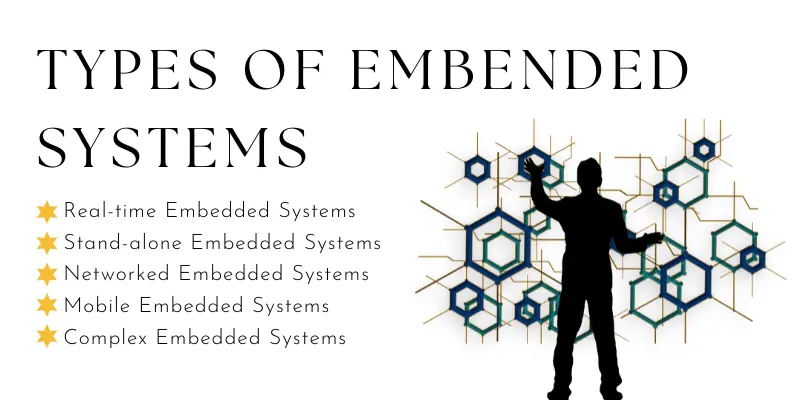
Types of Embedded Systems
Below are the common types of embedded systems:
1. Real-time Embedded Systems
Real-time embedded systems are designed to handle inputs and outputs within a set time frame. They are utilized in applications that require quick responses, such as automotive airbags or medical devices. These systems must satisfy strict timelines to ensure their safety and functionality.
2. Stand-alone Embedded Systems
Stand-alone embedded systems are meant to function alone, without the need for external devices or networks. These systems may handle specialized tasks on their own, such as managing a microwave or a digital watch. They are often simple, inexpensive, and efficient for certain activities.
3. Networked Embedded Systems
Networked Embedded Systems are designed to connect to a network and communicate with other devices. These systems frequently collect and share information with other devices or servers, such as smart thermostats or security cameras. They require network connections to complete activities, making them perfect for IoT (Internet of Things) applications.
4. Mobile Embedded Systems
Mobile Embedded Systems are found in portable, battery-powered devices like smartphones, tablets, and wearable technology. These systems are designed to be compact, energy-efficient, and responsive for on-the-go use. They often handle tasks like communication, navigation, and fitness tracking while prioritizing power consumption and portability.
5. Complex Embedded Systems
Complex Embedded Systems (CES) are high-performance systems used in applications requiring significant computing power, such as robotics, medical imaging, and industrial automation. These systems frequently use numerous processors to execute complicated tasks such as real-time data processing, decision-making, and advanced machinery control. They are often more advanced, requiring higher levels of reliability and accuracy.
6. Embedded Systems for Consumer Electronics
Embedded Systems for Consumer Electronics are specialized systems present in products such as televisions, digital cameras, and audio equipment. These systems control display settings, process audio data, and handle user inputs. They are intended to deliver efficient, dependable, and user-friendly performance in common consumer products.
How to Choose the Right Type of Embedded System
Choosing the right type of embedded system depends on several factors related to your specific needs and the project at hand. Here are some key points to consider:
1. Purpose and Use Case
Consider what you intend to use the device for. Bluetooth devices are classified into several sorts, including headphones, speakers, and trackers. Bluetooth speakers or headphones are ideal for music, while smart Bluetooth hubs are ideal for smart home devices.
2. Range and Connectivity
Select a device with a suitable frequency range for your needs. Some Bluetooth devices operate effectively at a small range (30 feet), while others may support longer ranges. If you want to connect devices across rooms or outside, check for long-range Bluetooth devices.
3. Battery Life
Look for a device with an extended battery life. Check the battery life if you’ll be using the device while on the go. Devices like wireless earbuds or speakers should offer several hours of use, while trackers or other low-power devices can last days or even weeks.
4. Audio Quality (For Audio Devices)
If you’re buying audio gadgets, audio quality is crucial. Choose Bluetooth headphones or speakers with high-quality sound and features like noise-cancellation or deep bass. Before making a purchase, read reviews to help you determine the audio quality.
5. Compatibility
Make sure it’s compatible with your devices. Bluetooth gadgets should work with your smartphone, tablet, or laptop. Make sure your device supports the same Bluetooth version for a smooth connection.
6. Durability and Design
Consider how well the device was manufactured. If you want to use Bluetooth devices in harsh environments (such as the outdoors or while exercising), search for waterproof or rugged varieties. Select a design that suits your style and comfort requirements.
7. Price
Balance features and budget. While premium devices have superior performance and functionality, numerous low-cost Bluetooth choices always provide excellent quality. Determine how much you are willing to spend and then compare features within that budget.
8. Additional Features
Look for additional features that meet your needs. Some Bluetooth devices support voice assistants, touch controllers, and multi-device pairing. Consider which features will enhance your experience based on how you want to use the gadget.
Common Mistakes to Avoid When Buying an Embedded System
Here are some common mistakes to avoid when buying an embedded system:
1. Not Understanding Your Requirements
Failure to clearly define the system’s purpose can result in selecting an unsuitable embedded system. Before making a decision, make sure you understand the tasks you want the system to perform.
2. Overlooking Power Consumption
Power efficiency is critical, especially for battery-operated devices. Always consider the system’s energy usage, particularly for portable or low-power applications.
3. Choosing Based on Price Alone
While budget is important, focusing only on price may result in selecting a system that lacks necessary features or dependability. It is critical to strike a balance between cost, performance, and long-term value.
4. Ignoring Compatibility
Ensure the embedded system integrates seamlessly with your existing hardware or software. Incompatibility can lead to costly delays or extra work to make things function together.
5. Neglecting Future Expansion Needs
Choose a system that allows for growth or upgrades in the future. Systems with limited expansion options might force you to replace the entire setup later on, leading to unnecessary costs.
6. Not Considering Documentation and Support
Poor documentation or a lack of support can make troubleshooting difficult. Make sure the system comes with clear manuals and the manufacturer provides reliable technical support.
7. Underestimating Environmental Factors
Embedded systems used in harsh environments need special consideration. Ensure the system is built to withstand specific conditions like extreme temperatures, moisture, or vibrations.
Conclusion
So, in this article, we studied the many types of embedded systems in detail. As we’ve seen, selecting the proper system is all about understanding the task at hand and making sure the system matches exactly with your project objectives. I recommend carefully considering future updates and compatibility, as these aspects can determine the success of your system. If you’re ready to make a decision, try exploring your alternatives further—you’ll find the best fit for your needs!
Frequently Asked Questions (FAQs)
There are five main types of embedded systems: Real-time, Stand-alone, Networked, Mobile, and Complex systems. Each type is designed for specific functions, ranging from time-sensitive tasks to portable devices and complex applications.
It depends on the system. Some embedded devices support upgrades, specifically software or firmware, to improve functionality or resolve defects. However, many embedded systems are intended for a specific purpose and may have restricted upgrade possibilities due to hardware constraints.
Compatibility ensures that the embedded system can interact with other devices or systems, such as sensors or communication networks. It is critical to select an embedded system that works with the hardware, software, and other components in your project.
An embedded computer is a customized system that performs a specific purpose within a bigger device. Microcontrollers, for example, are widely employed in appliances such as microwaves and fitness trackers to regulate settings and process data. Unlike general-purpose computers, embedded systems prioritize efficiency and reliability for specific tasks with limited resources.
Here are 5 common uses of embedded computers:
- Home Appliances
- Automobiles
- Medical Devices
- Consumer Electronics
- Industrial Automation






- Be Respectful
- Stay Relevant
- Stay Positive
- True Feedback
- Encourage Discussion
- Avoid Spamming
- No Fake News
- Don't Copy-Paste
- No Personal Attacks
- Be Respectful
- Stay Relevant
- Stay Positive
- True Feedback
- Encourage Discussion
- Avoid Spamming
- No Fake News
- Don't Copy-Paste
- No Personal Attacks
