Types of Allergies Explained: Causes, Symptoms & Treatment
Published: 21 Apr 2026
Allergies are a reaction of the body when the immune system overreacts to harmless substances such as dust, pollen, food, or pet hair. Normally, these things are safe, but in some people, the body treats them as a danger. This can cause symptoms such as sneezing, itching, rashes, or breathing issues.
The immune system protects us from harmful germs, but in allergies, it becomes too sensitive and releases chemicals that create discomfort in the body.
In this article, we will learn about the types of allergies, their common causes, symptoms, and how you can manage them in daily life. So let’s move ahead and explore each type simply and clearly.
What Causes Allergies?
Allergies happen when the immune system becomes too sensitive and reacts to harmless substances like dust, pollen, food, mold, or pet hair. These substances are called allergens. In normal people, they do not cause any problem, but in allergic people, the body treats them as a danger.
When a person comes in contact with an allergen, the immune system releases chemicals like histamine. These chemicals cause allergy symptoms such as sneezing, itching, skin rashes, watery eyes, or breathing problems.
There are many reasons why allergies develop. Some people get allergies due to genetics, meaning it runs in the family. Others develop them because of changes in the environment, pollution, or long-term exposure to allergens. Weak immune response or high sensitivity can also increase the chances of allergies.
Understanding these causes helps you identify triggers early and manage different types of allergies in a better way.
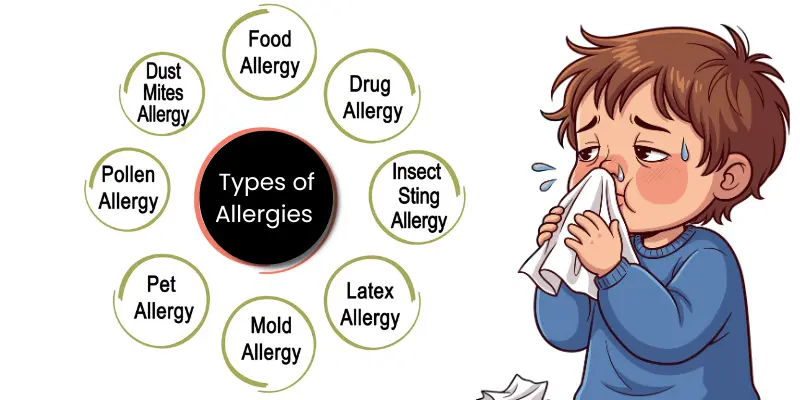
Types of Allergies
There are many types of allergies, and each type is caused by different triggers. Some allergies come from food, some from the environment, and some from medicines or animals. Understanding these types helps you find the exact cause of your allergy and manage it in a better way. Let’s look at the most common types one by one in simple words.
1. Food Allergies
Food allergies happen when your body reacts to certain foods like peanuts, milk, eggs, fish, or shellfish. Even a small amount of these foods can cause symptoms like itching, swelling, stomach pain, or, in severe cases, breathing problems. Food allergies are very common and need careful attention while eating.
2. Seasonal (Pollen) Allergies
Seasonal allergies are also called hay fever. They usually happen in spring or autumn when plants release pollen into the air. This can cause sneezing, a runny nose, watery eyes, and throat irritation. People with this allergy often feel worse outdoors during high pollen seasons.
3. Drug Allergies
Drug allergies occur when the body reacts to certain medicines like antibiotics or painkillers. Symptoms may include skin rashes, itching, swelling, or dizziness. In some cases, drug allergies can be serious, so it is important to stop the medicine and see a doctor immediately.
4. Skin Allergies
Skin allergies happen when your skin comes in contact with irritating substances like soaps, metals, cosmetics, or chemicals. This can lead to redness, itching, dryness, or rashes. It is also called contact dermatitis and is very common in daily life.
5. Pet Allergies
Pet allergies are caused by proteins found in animal skin flakes, saliva, or urine. Cats and dogs are the most common triggers. Symptoms include sneezing, watery eyes, coughing, and sometimes breathing difficulty, especially in closed spaces.
6. Mold Allergies
Mold allergies occur when you breathe in tiny mold spores found in damp areas like bathrooms or basements. This can cause coughing, sneezing, and breathing issues. Keeping your home dry and clean helps reduce this allergy.
7. Insect Sting Allergies
Some people are allergic to insect stings like bees, wasps, or ants. A sting can cause swelling, pain, redness, and, in severe cases, a strong allergic reaction. Quick medical help is important if symptoms become serious.
Common Symptoms of Allergies
Allergies can show different signs in the body, and these symptoms help you identify the problem early. Here are the most common symptoms of allergies:
- Sneezing
- Runny nose
- Blocked nose
- Itchy eyes
- Watery eyes
- Skin rash
- Itching
- Red skin
- Swelling
- Coughing
- Breathing problems
- Wheezing
- Stomach pain
- Nausea
- Vomiting
How Allergies Are Diagnosed
Doctors use simple tests and checks to find out what is causing an allergy. This helps identify the exact trigger so the right treatment can be given. Here are the common ways allergies are diagnosed:
- Skin prick test (small amount of allergen placed on skin)
- Blood test (checks allergy antibodies in the blood)
- Patch test (used for skin contact allergies)
- Medical history check (doctor asks about symptoms and triggers)
- Food elimination test (removing certain foods to find the cause)
- Physical examination (checking visible allergy signs)
Treatment of Allergies
Allergy treatment depends on the type and severity of the reaction. The main goal is to reduce symptoms and avoid the triggers that cause allergies. Here are the common treatment options for allergies:
- Antihistamine medicines to reduce sneezing, itching, and a runny nose
- Nasal sprays to clear a blocked nose and reduce inflammation
- Eye drops for itchy and watery eyes
- Avoiding known allergens like dust, pollen, or certain foods
- Allergy shots (immunotherapy) for long-term relief in severe cases
- Corticosteroid medicines to reduce strong allergic reactions
- Using emergency injection (like epinephrine) for serious allergic reactions
- Keeping surroundings clean to reduce exposure to allergens
How to Prevent Allergies
Allergies can be reduced or avoided by making small changes in daily life. Prevention is always better because it helps you stay away from uncomfortable symptoms before they start. Here are some simple ways to prevent allergies:
- Keep your home clean and dust-free
- Avoid exposure to known allergens like pollen, dust, or pet hair
- Wash your hands and face after coming from outside
- Use a mask during high pollen or dusty seasons
- Keep windows closed during allergy season
- Wash bed sheets and pillows regularly
- Avoid foods that trigger your food allergies
- Maintain good hygiene and personal cleanliness
- Keep pets clean and limit their access to sleeping areas
- Use air filters or purifiers if needed
When to See a Doctor
You should see a doctor when allergy symptoms become severe or start affecting your daily life. If you have trouble breathing, chest tightness, or swelling in the face, lips, or throat, it can be a serious allergic reaction and needs urgent medical care. Also, if symptoms like sneezing, skin rashes, or itching do not improve with basic treatment or keep coming back, it is important to get a proper checkup. A doctor can help identify the exact cause of your allergy and suggest the right treatment for better control.
Conclusion
Allergies are a common health issue, but they can be managed easily if you understand them well. In this article, we learned about different types of allergies, their causes, symptoms, diagnosis, and treatment options. Each type of allergy has its own trigger, so identifying the right one is very important for proper care.
Knowing your allergy type helps you avoid triggers and take the right steps for treatment on time. This not only reduces symptoms but also improves your daily life and overall health.
If you often face allergy symptoms, don’t ignore them. Stay aware, take precautions, and consult a doctor when needed. Understanding allergies is the first step toward better health and a comfortable life.
FAQs About Types of Allergies
Here are some frequently asked questions that will help you better understand allergies and how to manage them in daily life:
The most common types of allergies include food allergies, pollen (seasonal) allergies, skin allergies, drug allergies, pet allergies, and mold allergies.
Most allergies cannot be fully cured, but they can be controlled with proper treatment, medicines, and by avoiding triggers.
Allergies happen when the immune system reacts too strongly to harmless substances like dust, pollen, food, or pet hair.
You can find out about your allergy through skin tests, blood tests, or by consulting a doctor who checks your symptoms and medical history.




- Be Respectful
- Stay Relevant
- Stay Positive
- True Feedback
- Encourage Discussion
- Avoid Spamming
- No Fake News
- Don't Copy-Paste
- No Personal Attacks
- Be Respectful
- Stay Relevant
- Stay Positive
- True Feedback
- Encourage Discussion
- Avoid Spamming
- No Fake News
- Don't Copy-Paste
- No Personal Attacks
